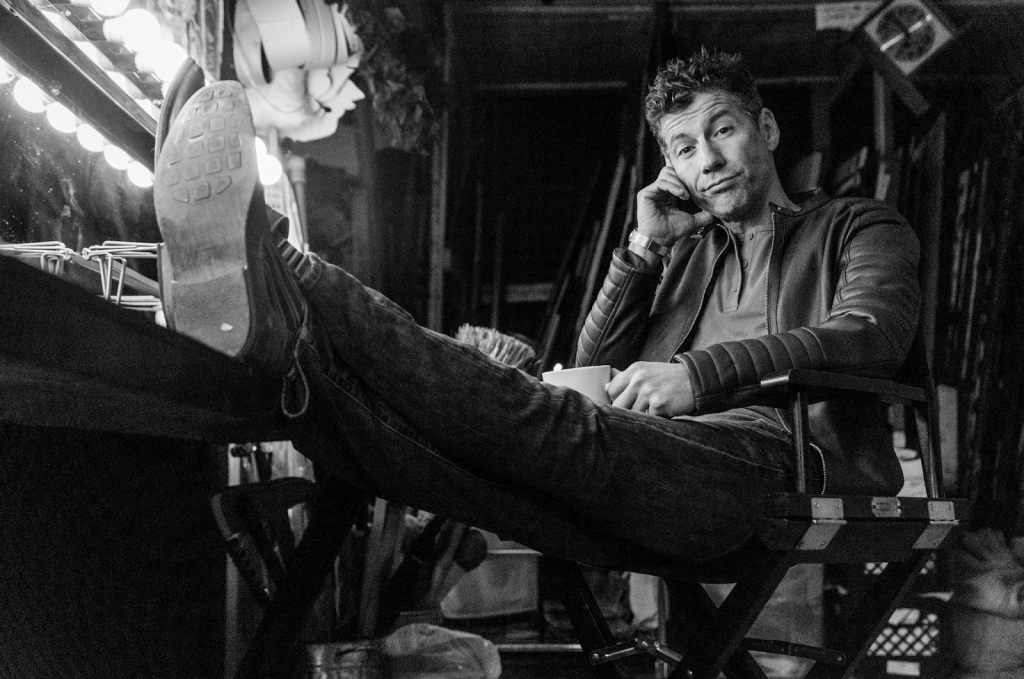

I’m so stoked to be interviewing you! We go way back. You’ve been an inspiration of mine ever since we met, as well as a mentor, friend, and supporter. I’m a huge fan of you! And I’m very grateful for you. Also! You’re like the first subscriber to this blog. You’re VIP!
Matty! It’s an honor to be your first subscriber. You’re right, we do go way back and thank you for all the kind words and also, right back at you! It’s been such a joy watching literally the kindest human I know have so much success; it truly could not have happened to a nicer guy.
- For those that don’t know you, where are you from and what are some of your favorite highlights from your career as an actor and entrepreneur? And what’s inspiring you to take the leap into stand-up?
I’m from the San Francisco Bay Area, but have lived all over— Atlanta, Los Angeles, Boulder, and Reno are the main ones, and then a bunch of short-term places in between over the years.
Career highlights? Well, which career? I have not only moved around a lot geographically, but career-wise as well. I’ve started businesses in home furnishings, sports nutrition, art, a couple of restaurants— I’ve tried almost everything. Highlights… things I’m proud of include making a living for the last 22 years with my artwork all made out of vintage license plates.
Acting-wise, certainly my first highlight was hosting my own show on HGTV a very long time ago, but what I’m most proud of is a short film called “Charles Gray” that I made this year that I wrote, directed and acted in. It’s something I’ve wanted to do my whole life but was too intimidated until now. It’s my first time directing. I learned so much and am excited to share it with the world next year. It’s my hope to make a feature in 2025.
As far as really going full speed ahead with stand-up, it’s something I’ve always loved and always wanted to do, but again, I was too afraid mostly. I did it briefly in 2009, for less than a year. It was okay, but I wasn’t writing about stuff that really meant something to me. When I came back to it a few years ago, I decided I was going to write about my life as honestly as I could and that’s been very freeing and, as it turns out, seems to really resonate with people in a way I wasn’t sure it would.

- I love in your stand-up that you talk about your life. How do you decide which personal stories from your life will work best on stage, and do you ever find it challenging to share such vulnerable moments?
It has taken me a very long time to be able to talk about the stuff that I do (my own depression and anxiety as well as other mental health issues in my family and other super hilarious topics) in a way that works on stage. That is, in a way that is funny. It’s been a long process of trial and error that I’ve done both with an amazing group of comics that I write with and the old favorite of “try it on stage and see what happens.”
In the early days when things didn’t work, I had to figure out if it was because it just wasn’t funny, or, as was sometimes the case, I hadn’t made it clear to the audience that, even though I was talking about some dark stuff, it was okay for them to laugh at it. That I was okay.
As I’ve started doing longer shows, that has gotten easier and smoother. Dropping jokes about serious mental illnesses or suicide in a five-minute set on a Tuesday night at a club is a lot more challenging (and quite frankly, ill-advised) than doing it 45 minutes into an hour show where people have gotten used to what I do and it’s not as unexpected.
It has definitely been challenging. Writing what is now my 80-minute show called “Mostly Jokes” is the hardest thing I’ve ever done. But for some reason, it’s less challenging than talking about this stuff in my everyday life and normal day-to-day conversation. I think because on stage, I’m at least somewhat sort of in control of the situation.
- Is there a particular story you’ve shared during your set that had an unexpectedly strong reaction from the audience? What did that moment mean to you?
Certainly, the story and jokes about my brother committing suicide tend to get the strongest reaction most nights. The first joke I told about it took me sixteen years to write, even though I had the thought almost immediately when it happened. It just took that long to figure out how to make it funny. And let me tell you, not everyone finds it funny.
I really struggled with that stuff— with whether it was appropriate, whether it was disrespectful, I just wasn’t sure. Sometimes I’m still not. But something made me keep writing about it and it went from one joke to something like fifteen minutes.
Early on, when I only had a couple jokes about it, I was close to abandoning it entirely, but for some reason I posted a video of those jokes to a stand-up comedy subreddit. I did so fully expecting to delete it as soon as the negative comments started coming in (I’m fragile!) but to my surprise it went the other way. Don’t get me wrong, there were absolutely some negative comments, but the vast majority were overwhelmingly positive and supportive and it went kinda viral with a few hundred thousand views.
Lots of people who had similar experiences posted really positive comments and that was the moment I decided to really lean in and keep working on it. I’m still not sure it’s done, but it’s become kind of the centerpiece of my show. I know it’s not for everyone and I’ve made my peace with that, but I also know the people that like it, probably, maybe, possibly, kind of NEED it, too. Because people just don’t talk about that stuff. Hell, I didn’t talk about it for seventeen years, either.

- How do you strike a balance between keeping your comedy relatable while still staying true to the unique details of your own experiences?
Sadly, talking about clinical depression, anxiety, loneliness, regret and a challenging childhood and unhealthy family dynamic is a lot more relatable than I would have thought. We all think we live these special, unique lives, but I just don’t think that’s the case. Anytime someone says to me after a show “I totally get what you were talking about!” All I can think is, I’m so sorry!
Stand-up is so strange in that the more specifically personal you get, the more universal a topic seems to be, so as much as I think I’m some special person having the most unique experience and there’s no way anyone could ever understand me, when a crowd is totally on board with the fact that I eat pints of ice cream wearing a single left-handed glove that I keep— where else— in my glove compartment, I know we’re all fighting the same battles in one way or another.
- What’s the most meaningful feedback you’ve received from someone who connected with your comedy on a deeper, personal level?
I performed up in Boise a couple months ago at a great club called The Lounge at the End of the Universe. I was just featuring, not even doing my whole show, so I didn’t get into the really dark stuff, but I had a young guy, early 20s, come up to me after and thank me for talking about having depression as it was something he really struggled with and didn’t know how to talk about it. That meant a lot to me. That doesn’t happen every show, but it happens enough that I know my people are out there. So, even though I never know who it might be during a show, I always try to imagine there’s at least one person like that out there.

- Do you find that sharing your real-life stories through comedy is a form of therapy for you, or is it more about helping others process their own lives?
Hopefully, it’s a bit of both. On the one hand, I’m just cracking jokes so I don’t think I’m having any life-changing effects, but I do think that for me at least, talking about the stuff I do and connecting with people by (mostly) laughing about it, makes me feel a little bit less alone. And even if that only lasts while I’m on stage, that’s still better than not at all. My hope is that one person in the audience can feel (again, even if it’s only for a few minutes,) a little bit less alone, too.
Also, for the record: I do also have a bunch of jokes about Paul Rudd, so it’s not all doom and gloom.

- What’s next for you? And where can people find you these days?
I’ve been touring my show the last few months, around the western US mostly. I’m on a bit of a break right now, but I have lots of shows coming up starting in early 2025 in Tucson, Portland, Salem, Seattle, Bend, Eugene, Bellingham, Vancouver, Bentonville and hopefully more soon. If anyone reading this has a club, a wine bar, a theater, a barn, or a big house and a bunch of friends, hit me up and I’ll come to you.
All my tour dates and details are at AaronFoster.com or on my IG @AaronCharlesFoster
 Ctrl Alt Delete Stress